


Car won’t start – common causes and safe first steps
If your car lets you down, Tieapu24 comes to the rescue!
When your car will not start, the first observation is important: is the car completely dead, do you hear a clicking sound when trying to start it, does the starter motor turn slowly, or does it turn normally without the engine starting?
The symptom helps you assess whether the situation is caused by a drained 12-volt battery or another fault. However, not all starting problems should be solved by yourself.
If the car is in a dangerous location, or if there is smoke, a burning smell or an unusual sound, focus on safety and ask for help.
Need jump-start assistance right away?
Call Tieapu24’s 24/7 assistance line. Tell us your location, vehicle details and what happens when you try to start the car.
Quick guide when your car won’t start
- First, make sure the car and passengers are in as safe a place as possible.
- Observe what happens when you try to start the car.
- Check the gear selector position, key function and dashboard messages.
- Do not try to jump-start the car if you do not know the correct procedure or if the battery appears damaged.
- Stop trying to start the car if there is smoke, a burning smell or an unusual sound.
What happens when you try to start the car?
Different symptoms can point to different problems. The list below can help you make an initial assessment, but it does not replace a proper vehicle inspection.
The car is completely dead
What it may mean:
The cause may be a drained 12 V battery, an electrical connection issue or the fact that the car is not receiving power at all.
What to do next:
Safely check whether the car responds to the key, whether the interior lights come on or whether the central locking works. If the car does not respond at all, do not keep trying to start it unnecessarily. Order jump-start assistance or roadside assistance, especially if the car is on the roadside or in another difficult location.
The dashboard lights dim significantly
What it may mean:
The battery may not have enough power to start the car.
What to do next:
Stop repeated starting attempts if the car does not start after a few tries. Jump-start assistance may be the right solution if the car is in a safe location and the battery does not show signs of damage, leakage or freezing.
You hear a clicking sound when trying to start the car
What it may mean:
A clicking sound may point to a weak battery, an electrical connection issue or a starter motor fault.
What to do next:
Do not automatically assume the fault is only in the battery. If the lights are dim or the car reacts weakly, jump-start assistance may help. If the car has power but the engine does not turn over at all, the car may need further diagnosis or towing to a repair shop.
The starter motor turns slowly
What it may mean:
The cause may be a weak battery, cold weather or a battery that is nearing the end of its service life.
What to do next:
Do not strain the starter motor with long or repeated starting attempts. If the car does not start soon, order jump-start assistance. If the car starts but the symptom returns, the battery or charging system should be checked.
The starter motor turns normally, but the engine does not start
What it may mean:
The fault is probably not only in the battery. The cause may be related to fuel supply, ignition, the immobilizer, a sensor or another technical fault.
What to do next:
Do not continue long starting attempts. Safely check the fuel level, key function and dashboard warnings. If the car does not start after a few attempts or fault messages appear on the dashboard, ask for help. The car may need a roadside assistance assessment or towing to a repair shop.
The car starts but soon stalls
What it may mean:
The cause may be a problem with the charging system, fuel supply, electrical system or another technical issue.
What to do next:
Do not continue driving before the situation has been assessed. If the car stalls again immediately, driving may cause further damage or create a dangerous situation in traffic. Move the car to a safe place if possible and ask for help.
The electric car does not enter drive mode
What it may mean:
The problem may be related to the 12 V system, the traction battery charge level, charging, key recognition or a vehicle fault mode.
What to do next:
Check the vehicle’s messages and follow the manufacturer’s instructions. Do not try to tow or move an electric car yourself if you are not sure of the correct procedure. Ask for help so the vehicle can be handled with the right equipment and without the risk of further damage.
Check these things safely
Is the gear selector in the correct position?
An automatic car usually starts only when the selector is in P or N. Also make sure you press the brake pedal according to the vehicle’s instructions.
In a manual car, the clutch usually needs to be pressed down when starting.
Does the car recognize the key?
Check whether the dashboard shows a message about the key or the immobilizer. Try the spare key if it is easily available.
In a keyless system, a weak key battery may prevent the car from starting normally. Check the vehicle owner’s manual for where to place the key if the car needs to recognize it using a backup method.
Do the lights and other electrical devices work?
Dim lights, a dark dashboard or weak central locking may point to a drained 12-volt battery.
However, lights working does not necessarily mean the battery has enough power to start the car.
Is there fuel or charge in the traction battery?
Check the fuel level or the traction battery charge level. If the dashboard shows an error or warning message, take a photo before switching the power off.
The photo may help with assessing the situation when you contact roadside assistance.
Do you see or smell anything unusual
Do not continue starting attempts if any of the following apply:
there is smoke or steam coming from the car
you notice a strong burning smell or fuel smell
there is an unusual sound from the engine compartment
there is visible damage or leakage around the battery
there is an unusual fluid leak under the car
Common reasons why a car won’t start
Can you jump-start the car yourself?
Jump-starting may help if the symptoms point to a drained 12-volt battery. However, it should not be tried automatically in every starting problem.
You can consider jump-starting only when:
- the vehicle owner’s manual allows it
- you know the correct connection points and procedure
- you have a suitable jump starter or cables for the vehicle
- the battery is not damaged, leaking or frozen
- there is no smoke or burning smell from the car
- the work can be done in a safe location
Vehicle structures and jump-start points vary. That is why this guide does not include general step-by-step connection instructions.
Incorrect connection or the wrong procedure can damage the electrical system. If you are not completely sure, order jump-start assistance.
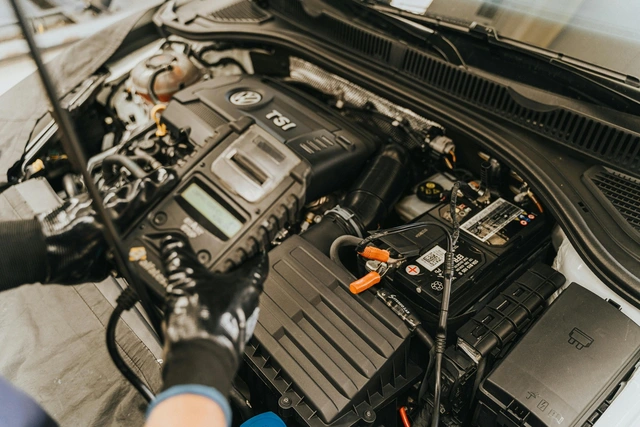
When used correctly, a battery booster can help if the starting problem is caused by a dead 12-volt battery.
When should you stop trying to start the car?
Stop trying to start the car and ask for help if:
- there is smoke, steam or a burning smell coming from the car
- the battery looks damaged, frozen or leaking
- there is a strong unusual sound from the engine or starter
- the starter motor turns normally but the engine does not start
- several attempts do not change the situation
- the car starts but soon stalls again
- there is a serious warning on the dashboard
- the car’s location makes investigating the fault dangerous
If the situation involves fire, injury or another immediate danger, call the emergency number 112.
When does the car need towing?
Towing may be the most sensible solution if the problem cannot be solved safely on site or if driving could cause further damage.
The car may need towing, for example, when:
- the car does not start despite correctly given jump-start assistance
- the engine starts but runs clearly abnormally
- the car stalls soon after starting
- there is a serious warning on the dashboard
- there is smoke, steam or a strong smell coming from the car
- an electric car does not enter drive mode
- there is uncertainty about the brakes, steering or another safety-related system
Tieapu24 assesses the situation based on the information provided and tells you whether the most sensible solution is jump-start assistance, other roadside assistance or towing.
What should you do if your car won’t start on the road?
Safety comes before investigating the fault.
- Switch on the hazard lights.
- Move the car to a safer place if possible.
- Put on a high-visibility vest before leaving the car, if one is available.
- Place a warning triangle only if it can be done safely.
- Move away from the roadway and the immediate vicinity of traffic.
- Do not stay doing repair work in a place where other traffic creates a danger.
Whether it is safer to leave the car or stay inside with the seat belt fastened depends on the location and traffic situation. Assess your surroundings before you act.
If there is an immediate danger to people or traffic, call 112. The emergency number is intended for urgent situations where official emergency assistance is needed.
What information should you give when ordering assistance?
Sending help is easier when you provide:
- your exact location and, if needed, direction of travel
- the car’s registration number
- the car’s make, model and powertrain
- what happens when you try to start the car
- visible warning lights or fault messages
- any smoke, smell, leak or unusual sound
- whether the car is, for example, in a parking garage or another confined location
- your insurance company, if known
Do not clear fault messages or switch the power off just to take a photo. Take a photo only if it can be done safely.
Can insurance cover jump-start assistance or towing?
Jump-start assistance, roadside assistance or towing may be included in your vehicle insurance. Coverage depends on the insurance policy, its terms and the situation.
Tieapu24 helps check insurance coverage when you order assistance. If the insurance does not cover the service, you will receive a price estimate before work begins.
Read more about when insurance may cover towing or roadside assistance.
Frequently asked questions
Need jump-start assistance or towing?
Call Tieapu24’s 24/7 assistance line and tell us what the car does when you try to start it.
We will assess the situation and tell you whether the most sensible solution is jump-start assistance, other roadside assistance or towing.